

Nature markets report 2026: paying ahead of the proof
Carbon credits, biodiversity units and nutrient credits are bought, approved and claimed years before anyone checks the outcome. This free report measures that gap across UK and Irish nature markets, from the Peatland Code and Woodland Carbon Code to biodiversity net gain, biodiversity credits, nature finance and TNFD disclosure, shows what buyers, lenders and regulators are starting to ask for, and how to tell evidence that will hold up from evidence that will not.
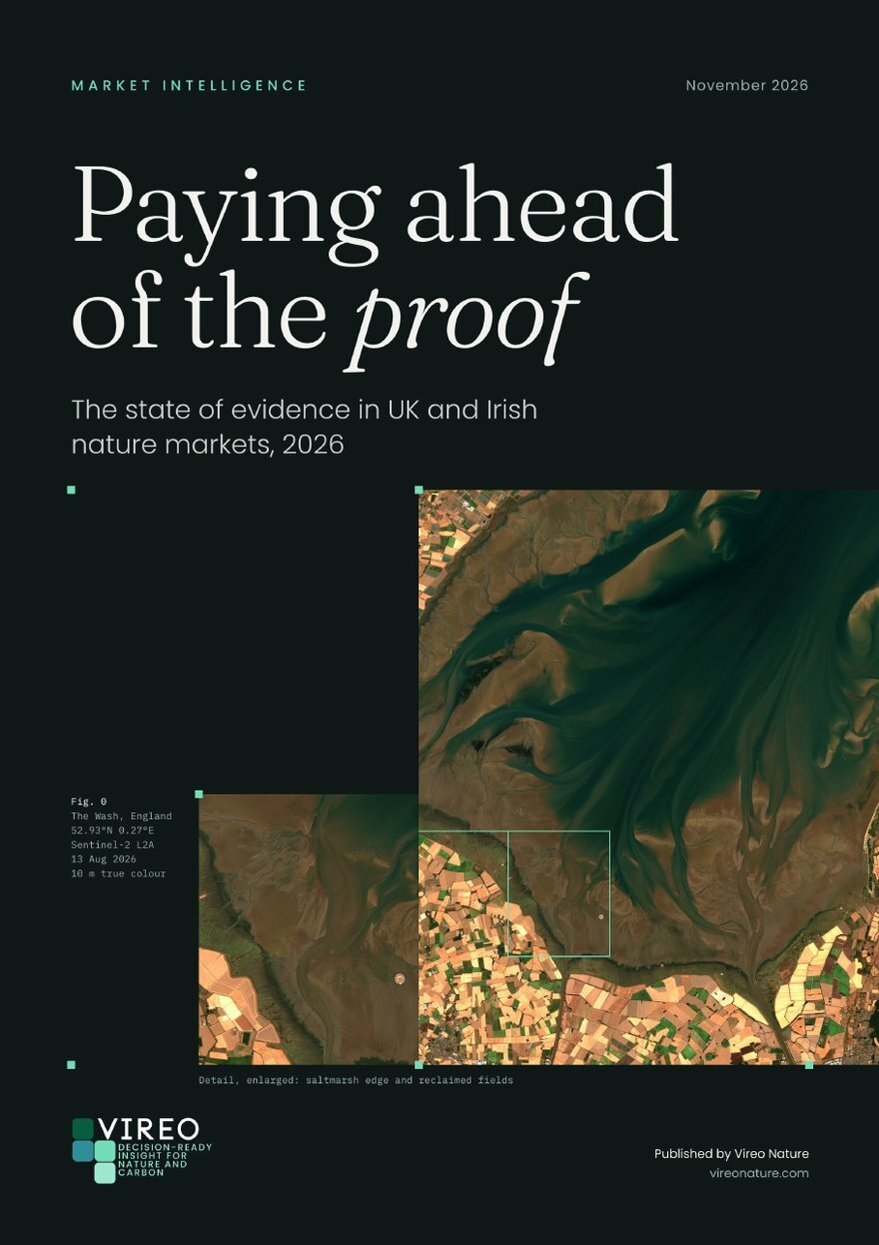
Cover: saltmarsh edge and reclaimed fields, The Wash. Contains modified Copernicus Sentinel data.
What the registers show
Every market reviewed now has rules. In each one, proof of outcome is deferred, and the systems that will supply it are still being built.
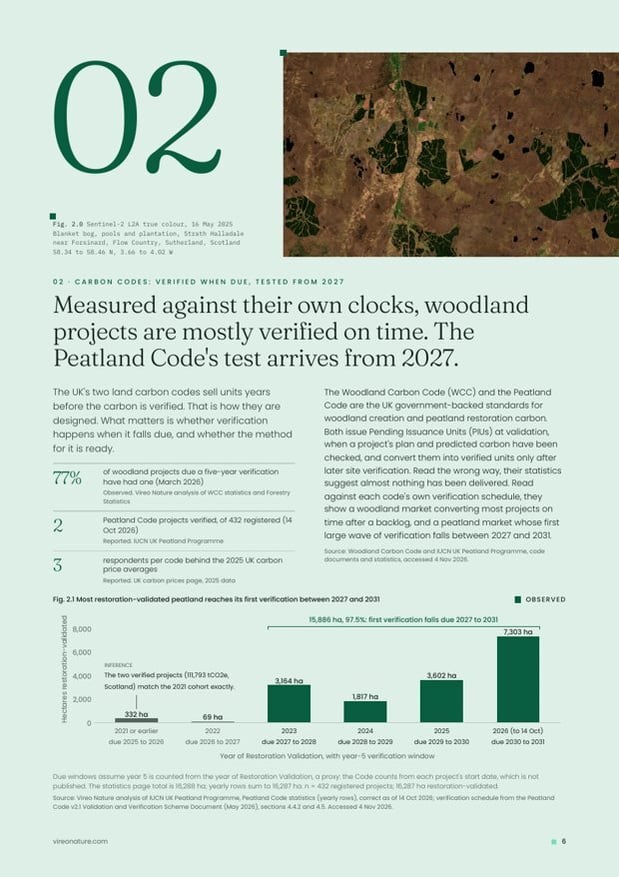
of woodland carbon projects due a five-year check have had one
233 of 302, March 2026. By area, 64%.
of restoration-validated peatland meets its first verification in 2027 to 2031
15,886 of 16,287 ha, under a method still being piloted.
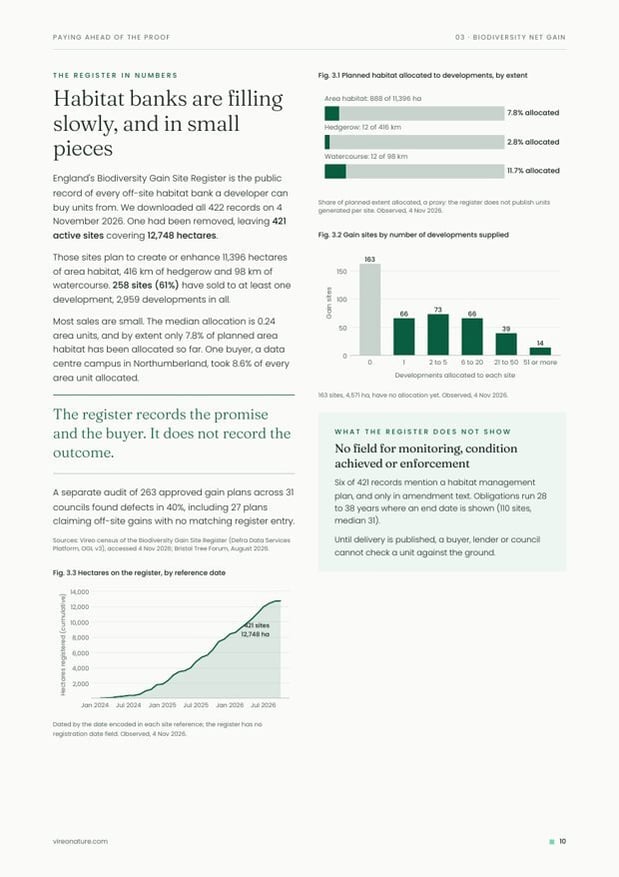
monitoring fields on England's biodiversity gain site register
421 sites and 12,748 ha registered, 30 years of delivery not visible.
of 263 approved gain plans in 31 councils had defects
A self-selecting sample, not representative. Bristol Tree Forum, Aug 2026.
of England's 35,000 ha peat target restored with direct funding
Outcome monitoring incomplete. National Audit Office, Mar 2026.
the date offset-based product claims became unlawful across the EU
Ireland's rules apply from the same day.
These six numbers are the start. The report sets out what sits behind each one, and what to ask before you rely on it.
Get the full reportInside the report
Inside the nature markets report: nine chapters, one question.
Public sources to 4 November 2026, plus two analyses you will not find elsewhere: how many carbon code projects due a verification have had one, and a site-by-site census of England's Biodiversity Gain Site Register. Where sources disagree, both figures are shown. The strongest case against asking for more evidence is set out in full, so you can judge it yourself.
- 01The finding in briefSix things the evidence shows, and what they mean for each reader
- 02Carbon codesWoodland and Peatland Codes, measured against their own verification clocks
- 03Biodiversity net gainA census of all 421 sites on England's gain site register
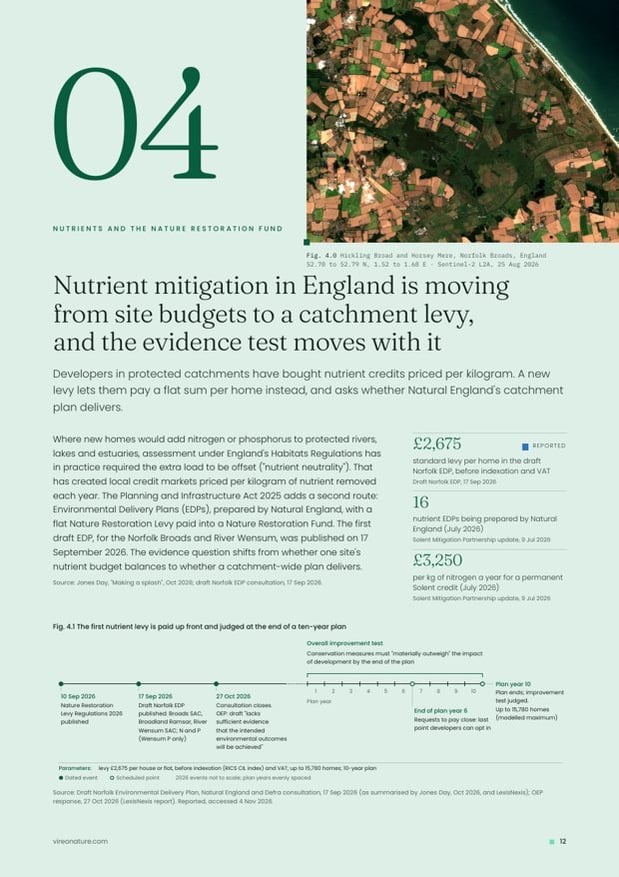
- 04NutrientsCredits, levies and the first Environmental Delivery Plans
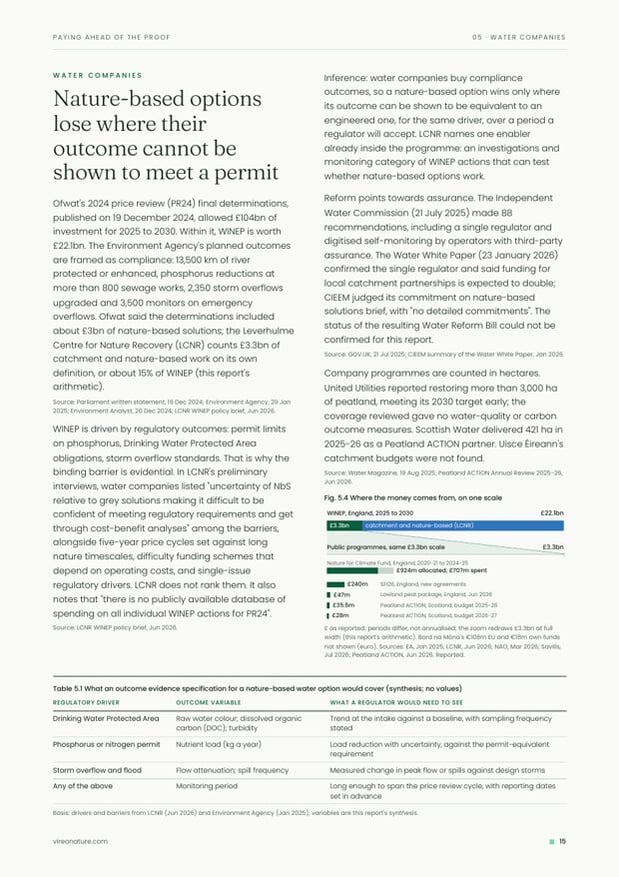
- 05Water companies and public fundersPaying for actions, asking for outcomes
- 06Finance, insurance and ratingsWhere delivery risk is now being priced
- 07Disclosure and claimsReporting duties softened, claims liability hardened
- 08Ireland and Northern IrelandTwo jurisdictions, one island, different instruments
- 09What good evidence looks likeAn evidence ladder and vendor-neutral checklists
Who it is for
Six reader groups, six questions to ask
Find your group. The report gives you the question to put to your team, your supplier or your borrower, and a checklist to answer it.
Buyers and claims teams
Does the wording match what the evidence covers, and when it will be verified?
Developers, landowners and habitat banks
Can we produce baseline, condition and monitoring records?
Housing, NSIPs and planning authorities
Does the gain plan pass a ten-point check?
Verifiers and standard setters
Are verification-due and verification-delivered figures published?
Lenders, investors and insurers
What loss or non-delivery history calibrates the buffer?
Public funders, water and regulators
Can the outcome be shown, not only hectares treated?
How it was made
Built to be checked
Three evidence labels
Observed: computed by Vireo Nature from a public register or dataset. Reported: published by a named official body, standard setter or study. Estimate: modelled or inferred, with the basis stated.
Independence
The report names no provider as a competitor and recommends no product. Recommendations are addressed to bodies that can act on them without buying anything. The methods behind both analyses are set out in full in the report.
Who made it
Researched, written and edited by the Vireo Nature team. AI tools were used to help gather and organise source material.
Questions
Is the nature markets report free?
Yes. Join the waiting list and the 26-page PDF is emailed to you free the day it is published. It covers UK and Irish nature markets to 4 November 2026, with every figure sourced, dated and labelled.
What does the report say about carbon credits in the UK?
It measures the Woodland Carbon Code and Peatland Code against their own verification clocks. 77 per cent of woodland carbon projects due a five-year check had one by March 2026, and 97.5 per cent of restoration-validated peatland meets its first verification between 2027 and 2031.
What does it find on biodiversity net gain and biodiversity credits?
A site-by-site census of England's Biodiversity Gain Site Register: 421 sites and 12,748 hectares registered, with no field that shows monitoring, condition achieved or enforcement over the 30 years of delivery.
Does it cover TNFD and nature finance?
Yes. Chapters on finance, insurance and ratings show where delivery risk is now being priced, and the disclosure chapter covers TNFD and the rules on environmental claims: reporting duties have softened while claims liability has hardened.
Who is the report for?
Six reader groups: buyers and claims teams; developers, landowners and habitat banks; housing, infrastructure and planning; verifiers and standard setters; lenders, investors and insurers; and public funders, water companies and regulators. Each gets the question to ask and a checklist to answer it.